
Home · Brussels
The capital
An introduction to Brussels
Brussels is a bilingual capital — French and Dutch — and a convenient first stop for a visit to Belgium. The old centre is compact; some of the museums sit a short ride beyond it.
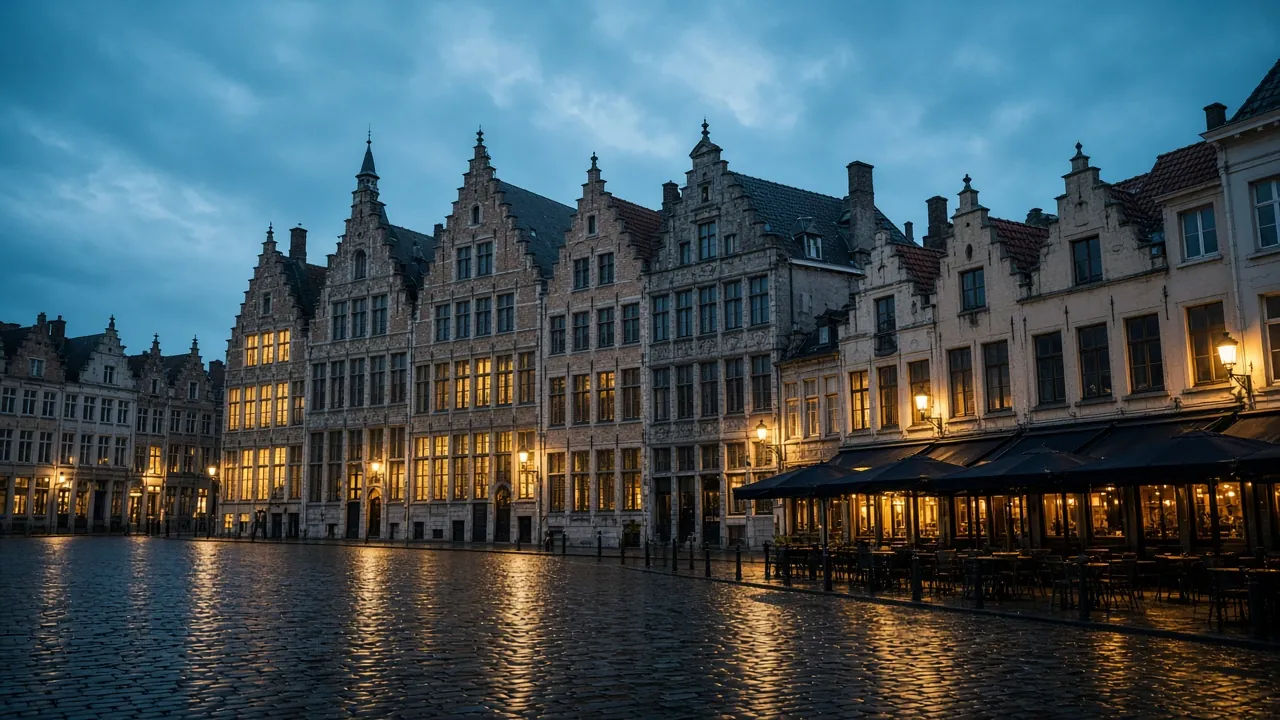
The city is often described as a crossroads of Europe, and the architecture of the centre still carries that history. It is easiest to think of Brussels in two parts, traditionally called the Lower Town and the Upper Town.
The Lower Town and the Grand-Place
The Lower Town gathers around the Grand-Place, a paved square framed by guild houses and the Gothic Town Hall. The Town Hall's tower, close to a hundred metres high and topped by a statue of St Michael, is the landmark of the square and can be visited on guided tours when they are running. Around the edges are pavement cafés and cellar restaurants. Many of the nearby streets are partly or fully pedestrian, and the cobbles lead towards Sainte-Catherine, the Îlot Sacré and the Marolles.
The Upper Town
The Upper Town feels different: broader boulevards, the main museums, and shopping streets such as Avenue Louise and the Sablon. The federal parliament building stands in this part of the city and is worth a look from the outside, even if you do not go in.
Two well-known stops
Manneken Pis, the small fountain of a boy, is a familiar emblem of the city and often a surprise on a first visit because of its modest size. A short walk from the very centre, the Cathedral of St Michael and St Gudula raises a pair of towers over the Parvis Sainte-Gudule.
The Belgian Comic Strip Center — the Centre Belge de la Bande Dessinée — is the place to go for the Franco-Belgian comic tradition, including Hergé's Tintin. It occupies a handsome former warehouse a little outside the tightest part of the centre, and it is easy to confuse its French and English names; they refer to the same museum.
Most visitors find the fairest weather between May and September, though Brussels is a year-round city. You can read more about the seasons in When to visit Brussels, or take a longer view in A brief history of Brussels.